QUETTA: The so-called Chief Minister of Balochistan, acting on the directives of Pakistani military authorities, has approved rules for the establishment of detention centers by granting legal cover to the policy of enforced disappearances.
The Balochistan cabinet has approved the Balochistan Centre of Excellence on Countering Violent Extremism Rules 2025. Following the approval of these rules, detention centers can now be established across Balochistan where individuals detained by security institutions on suspicion of terrorism will be held.
According to the Balochistan Home Department, two such detention centers will be set up in Quetta and Turbat.
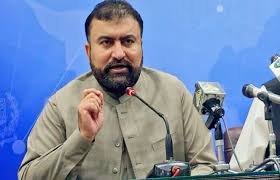
It is worth noting that the 22nd meeting of the Balochistan cabinet has been underway since Monday. Earlier today, the so-called Chief Minister of Balochistan, Sarfaraz Bugti, issued a statement regarding the law through his X (formerly Twitter) account.
The Chief Minister claimed that the Balochistan cabinet has permanently resolved the issue of missing persons. Terming the decision “historic,” he alleged that “various people politicize the issue of missing persons, but we have buried this propaganda permanently.”
In his address, Sarfaraz Bugti stated that suspects would be interrogated at detention centers under the supervision of authorized police officers, and that family members would be allowed to meet detainees.
He further said that the Balochistan cabinet has also approved the Balochistan Prevention Detention and De-radicalization Rules 2025 and the Balochistan Witness Protection (Amendment) Bill 2025. According to him, the protection of complainants and witnesses at terrorism-related sites would be ensured, describing the approval of these laws and rules as a major achievement of the provincial cabinet.
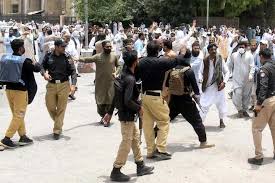
It should be recalled that enforced disappearances and extrajudicial killings by Pakistani forces in Balochistan have, over the past three decades, evolved into a major humanitarian crisis. Due to advocacy by the Baloch diaspora abroad, the issue has now gained international attention, resulting in strong criticism and pressure on the Government of Pakistan and its forces from the international community and human rights organizations. In response, it is alleged that justification has now been sought to continue this illegal and inhumane practice under the cover of law.