
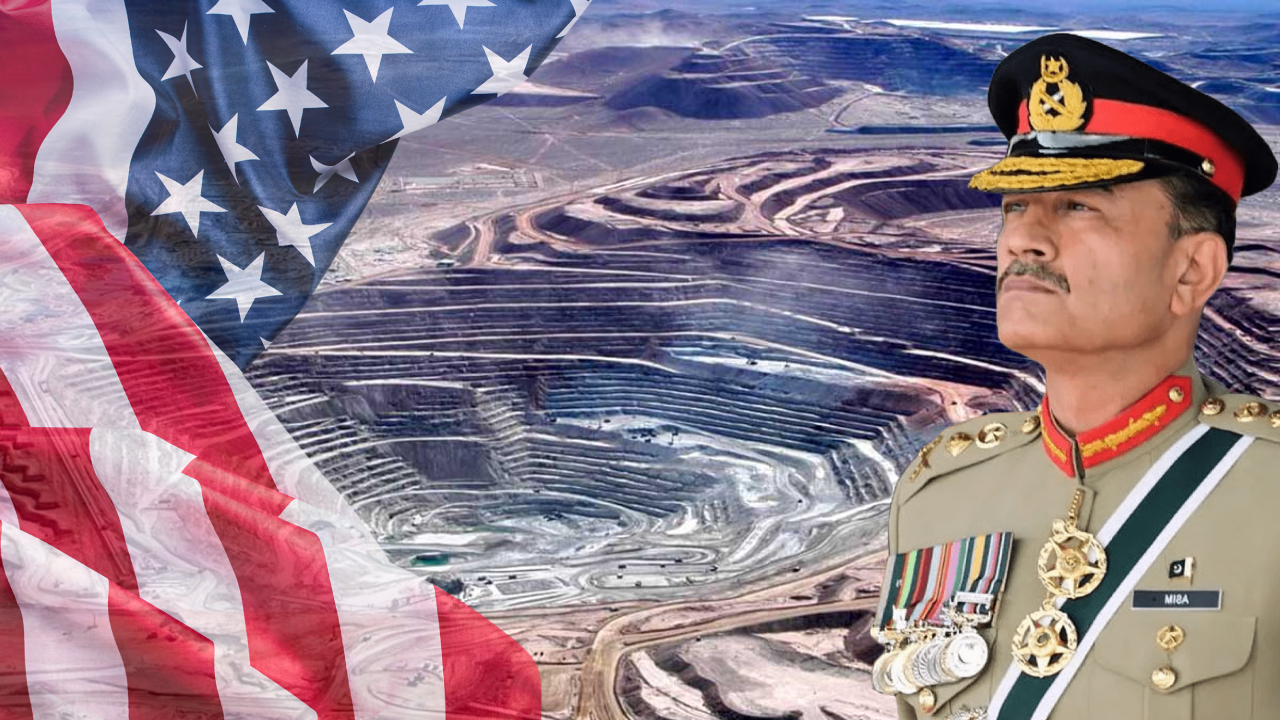
LONDON: The Baloch National Movement (BNM) has expressed deep concern over the U.S. EXIM Bank’s decision to provide $1.25 billion in financing support for the Reko Diq mining project in occupied Balochistan.
The organization said that the newly announced partnership between EXIM Bank, U.S. officials, and Pakistan contradicts international principles and basic human conscience. “We have serious and fundamental reservations about this development,” a spokesperson for the non-parliamentary Baloch party said in a statement. “We have repeatedly made it clear that any form of financial assistance or economic cooperation with Pakistan ultimately results in further genocide of the Baloch people, enforced disappearances, and systematic plunder of our resources,” the statement added.
BNM stated that the U.S. economic package of $1.25 billion for Pakistan would strengthen projects carried out under the guise of “development” in Balochistan—projects that, in reality, lead to intensified military operations, forced displacement of populations, and an accelerated and more severe takeover of Baloch resources.
The spokesperson said the United States itself fought a war of independence against colonial oppression and is aware of the historical consequences of suppressing freedom movements. “Yet today, by entering into such a partnership with Pakistan, the U.S. is effectively undermining the Baloch national struggle and reinforcing state repression. Despite the imbalance of power, every national liberation movement stands firm against external aggression until it achieves its historical and national objectives,” the statement emphasized.
BNM warned that U.S. financial assistance would be used for building more military camps and check-posts in Balochistan, expanding surveillance infrastructure, exploiting natural resources, and crushing the Baloch resistance. “In these circumstances, EXIM’s financing support amounts to providing oxygen to Pakistan’s occupation and the ongoing Baloch genocide.”
The statement added that before celebrating “investment opportunities” in Balochistan, the United States must confront its own conscience and values. “Thousands of Baloch youths are suffering in Pakistan’s secret torture cells, while thousands of mothers and sisters wait in agony on the streets for their disappeared loved ones. In such a situation, American support does not heal Baloch wounds—it salts them. We expect the American conscience to oppose this repression, not strengthen it under the guise of investment.”