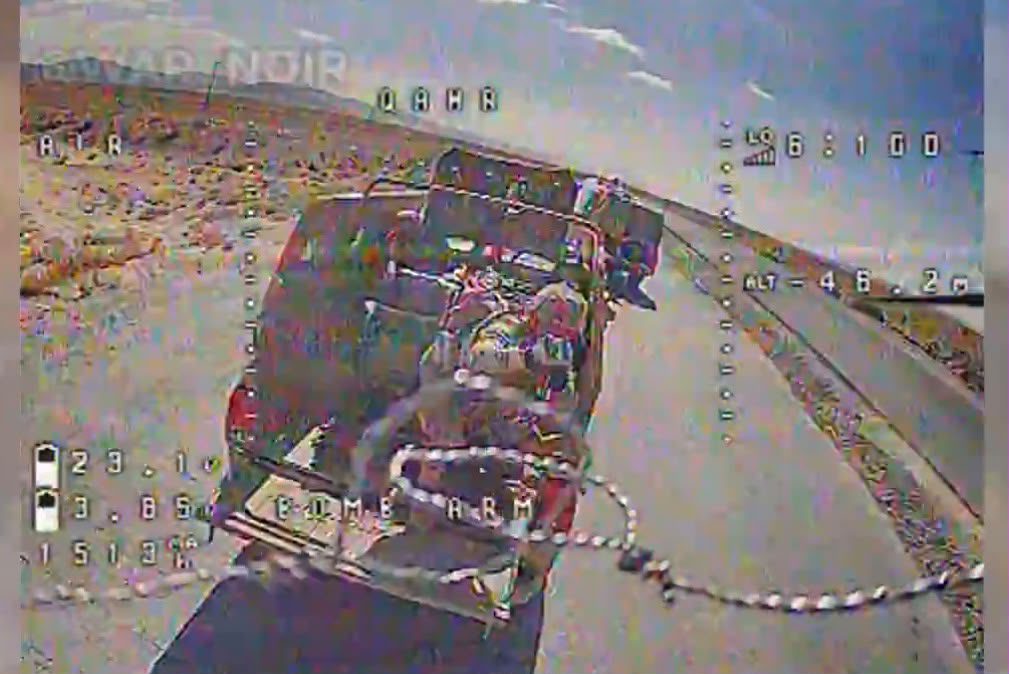
QUETTA, BALOCHISTAN: The Baloch Liberation Army (BLA) has claimed that its drone unit killed seven Pakistani army personnel in three separate attacks in Balochistan, according to a statement issued to the media by its spokesperson, Jeeyand Baloch.
The spokesperson said the group’s aerial and drone warfare unit, “QAHR”, carried out three attacks on Pakistani forces in Sorab, Kharan and Kalat, in which more than seven personnel were killed and several others seriously wounded. He also claimed the army suffered heavy financial and logistical losses.
According to the statement, Qahr launched nine consecutive drone attacks on an army camp at Tarki Dam area of Sorab on October 26, 2026, targeting supply and security posts. The group claimed the army suffered serious human and material losses but gave no figures.
The group said it carried out five guided drone attacks on the army’s main camp in Patkin on October 29, 2026, targeting defensive positions, including a mortar pit. It claimed two personnel were killed on the spot and three seriously wounded, and that military and defensive installations were heavily damaged.
The group said on October 30,2026 it launched three drone attacks on an army convoy advancing on the main highway in Rodinjo, followed immediately by an ambush by its ground fighters. It claimed five personnel were killed and two military vehicles badly damaged.
Video footage released to the media by the BLA’s media wing, Hakkal, has gone viral on social media. The footage purportedly shows drones hitting checkposts and moving vehicles of Pakistani forces.
The BLA has claimed drone attacks before. The spokesperson said Qahr (Qazi Aero Hive Rangers) was named after the legacy of senior BLA commander Abdul Basit Zehri, alias Qazi, and that its operational launch was formally announced on February 12, 2026. The group claimed the unit carried out its first operations during what it calls “Operation Herof II,” most notably drone attacks on military and port installations at Gwadar Port. He described the development as a historic milestone in adapting guerrilla warfare to modern technology.