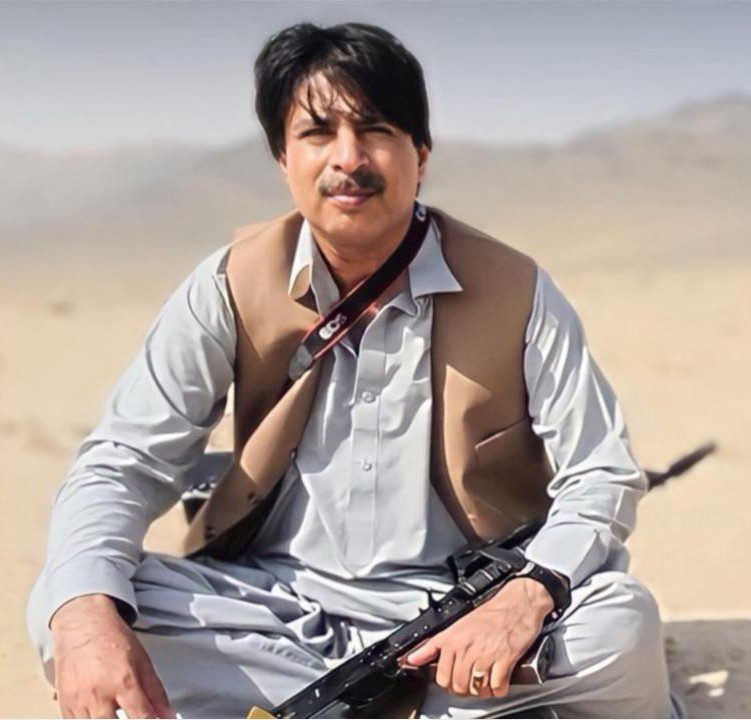
QUETTA, BALOCHISTAN: In an exclusive interview with The Sunday Guardian, Balochistan Liberation Front (BLF) chief and Baloch National Leader Dr. Allah Nazar Baloch spoke from an undisclosed location about the state of the Baloch insurgency, foreign investment, alleged Indian support and prospects for negotiation with Islamabad.
Q: The Baloch armed movement has demonstrated a marked differently operational capability this year, particularly after the BLA’s Operation Herof 2.0 and the BLF’s subsequent operations in places such as Naal, Nushki, Kech and Panjgur. Do you believe the Baloch armed movement has now entered a new phase of the conflict, and what is the military objective of this phase?
Dr. Allah Nazar said the Baloch freedom movement has clearly intensified, describing it as a long-running indigenous struggle shaped by nearly three decades of experience fighting the Pakistani military. He said local support and Balochistan’s vast geography give fighters a natural advantage, and that a younger “Gen Z” generation is now bringing renewed strength to the movement, armed with nationalist ideology as much as weapons. He stressed the objective remains political: full Baloch freedom.
Q: There are now different armed organisations operating in Balochistan, most prominently the BLA and BLF, with overlapping but not necessarily identical operations. How closely are you coordinating with the BLA today? Is there an operational mechanism for coordination between the organisations, or do you regard the two armed movements as strategically independent?
Dr. Allah Nazar said the BLF and BLA are increasingly well-coordinated at the ideological, strategic, and tactical level.
Q: You have been one of Pakistan’s most-wanted Baloch separatist leaders for more than two decades, and Pakistani authorities have repeatedly claimed that you were killed or incapacitated, yet you have continued to lead the BLF. Why do you believe the Pakistani state has failed to eliminate or capture you, and how much of the Baloch armed movement’s current strategy and operations are personally directed by you?
Dr. Allah Nazar said Pakistan has repeatedly tried to eliminate him and other leaders through direct action and false rumors of his death, without success. He said the BLF operates under a unified command structure with a long-term political strategy, adapting tactics to the military’s movements while keeping independence as the fixed goal.
Q: Balochistan is rich in copper, gold and other mineral resources, and projects such as Reko Diq and Saindak have become strategically important to Pakistan and foreign investors. Does the BLF oppose the extraction of Balochistan’s mineral resources by Pakistan and foreign companies (including future investment by United States-based companies) altogether, or is its objection to the way revenues, ownership and control are currently structured? If an independent Balochistan were established, what model of foreign investment and resource-sharing would you envisage?
Dr. Allah Nazar said the BLF fully opposes projects such as Reko Diq and Saindak, calling them exploitation of Baloch wealth carried out jointly by Pakistan and foreign investors, including potential future U.S. investment. He said companies involved in resource extraction are legitimate targets and that Balochistan’s national identity, culture and language are under threat alongside its economy. He said an independent Balochistan would direct its resources toward a welfare state for the Baloch people.
Q: Pakistan continues to allege that Baloch armed groups receive substantial Indian assistance, while India denies supporting the insurgency. You have previously spoken about India’s role and potential support. What, specifically, is the nature of the external assistance you believe the Baloch movement should receive today, and do you believe India should provide overt political, diplomatic or material support to the armed struggle?
Dr. Allah Nazar said, ‘As you mentioned, I have already spoken at length about the allegations and fake propaganda of the Pakistani establishment regarding Indian support.’
However, I hope India can play a better role in all ways, including political, diplomatic and moral support. We also hope India will support us materially and diplomatically in international forums like the UN, because India is the largest democracy in the world and a major power in our region. It is India’s moral duty to support the Baloch freedom movement by all means. Our movement is not merely an armed insurgency but an indigenous national liberation struggle.
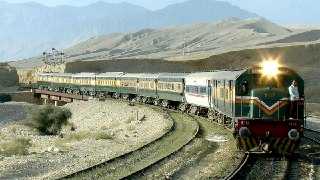
Q: The May 24 attack on the train carrying Pakistani security personnel and their families, as well as attacks in which civilians have been killed, raise a fundamental question about the rules of the armed struggle. What targets does the BLF consider legitimate, and where does it draw the line between attacking Pakistani security forces and attacking civilians or their families?
Dr Allah Nazar Baloch said the train attack on May 24 was carried out by BLA freedom fighters and comrades. The target was military personnel, and civilians were allowed by the freedom fighters to vacate the train and go safely during the operation. However, this was an unwise action taken by the Pakistani military. Despite being engaged with the freedom fighters, the Pakistan Army killed civilians in order to leave a question mark over the freedom fighters. But we have never legitimised the killing of civilians.
The Pakistani Army has used, and continues to use, its air force in Balochistan against civilians. Recently, Pakistan’s brutal and barbarous forces attacked and bombarded civilians in Gidar in Surab district. In their bombardments, numerous children, women and octogenarians lost their lives and were martyred, while dozens were injured. It is a clear war crime. Due to the lack of access for impartial media in Balochistan, which is restricted by the coloniser, Pakistan, they are committing the same crimes on a daily basis. They have established detention centres like the Nazis and are carrying out extrajudicial killings of Baloch masses.
He Furhter siad that it is not the first time that the Pakistani Army has used its air force. They have used air force jets in various areas of Balochistan, such as Meeri and Mashkay. They bombarded a shepherd’s family and killed ten members of one family belonging to Mir Saho, including his wife, nephews, brother and son. His youngest daughter, five-year-old Bakhti, was also martyred. Another example is in Wahli, Awaran district, where they used jets in 2015 and killed more than ten people from one family. However, it did not receive the attention of the international media. The Pakistani Army likewise claimed that the attacks were against Baloch freedom fighters.
These are only a few examples. The Pakistani Air Force has also used jets, and aerial bombardments have been carried out in Kohlu, Dera Bugti and various other areas of Balochistan, but the BLF regards and honours international laws of war. Through your media, we appeal to the international community and the UN Security Council to bring the Pakistani military junta, puppet civilian rulers and all those responsible before a court of justice for their war crimes.
Q: How do you interpret the U.S. designation of the BLA and Majeed Brigade as Foreign Terrorist Organizations? Does it signal a broader shift in Washington’s policy toward the Baloch armed movement, and could it affect the BLF’s international political space?
Dr Allah Nazar Baaloch said that, International powers have their own interests around the world. The United States has designated the Baloch Liberation Army as an outlawed organisation. In my view, major powers, including the US, have vested interests in Pakistan, while the Pakistani Army has historically served broader international interests. This has happened before; for example, Brigadier Zia-ul-Haq was posted in Jordan, where thousands of Palestinians were killed in a single day. Similarly, after 9/11, Pakistan changed its position following pressure from a major power.
However, I do not believe the US ban on the BLA will necessarily be permanent. The example of Syria provides a clear precedent, and in a broader context, I believe Washington may sooner or later reconsider its decision.
There is also a ray of hope in the international community. Recently, when China and Pakistan put forward a resolution at the UN Security Council seeking to impose sanctions on the BLA, the United States, Britain and France opposed it. In other words, they rejected the Sino-Pakistani resolution.
As for the BLF, it continues to have access to legal and political forums around the world that uphold freedom, human rights, human dignity, and the rights of oppressed nations and peoples.
Q: Pakistan claims to have weakened the insurgency’s command structure, yet attacks continue. What is the Pakistani military getting wrong about the insurgency and its ability to regenerate?
Dr Allah Nazar Baloch said, It is a baseless and irrational opinion of the Pakistani regime. It is simply intended to boost the degraded morale of the Pakistani military. In a recent briefing to the media, the DG ISPR acknowledged that they had conducted more than 31,000 military operations in Balochistan in a year. This shows their moral degradation and that they are unable to succeed in the combat field.
What the Pakistan Army does not understand is its failure to differentiate between a national liberation movement and a law-and-order situation and the emergence and strengthening of Baloch freedom fighters. So, I cannot say everything about it in the media, but I hope they repeat their mistakes again and again. No one can undermine the Baloch freedom movement and its mass support from the Baloch nation. Our people, our hills, our jungles and every stone of the Baloch homeland are unfamiliar to the Pakistani Army. That is why the Pakistani Army still cannot pronounce the names of places in Balochistan.
In this way of conducting a brutal counter-freedom movement, not only has the army lost its morale and ability to wage war, but it is also suffering from mental illness and exhaustion due to its regular engagements with Baloch freedom fighters.
As I expressed these words in my message to the world, the Pakistani Army is besieged in its cantonments and has restricted its movements. It has superior military and air force capabilities, but its air force is used against innocent Baloch civilians.
Q: Have enforced disappearances, arbitrary detention and extrajudicial killings changed the nature of the Baloch resistance, particularly by pushing young people toward armed groups? Would ending these practices and accounting for the missing reduce support for armed struggle?
Answering this Question Dr Allah Nazar Baloch said, Previously, I said that detention centres and extrajudicial killings, particularly targeting young and educated Baloch, are central concerns. Human rights organisations around the world have raised these issues and called for pressure on Pakistan. However, Pakistan, being governed by the military, has repeatedly failed to respect international law. We therefore appeal to the United Nations to intervene in Balochistan and declare it an international war zone.
As for young Baloch joining the freedom movement, I believe resistance to occupation and colonisation is the right of every nation. The Baloch freedom movement is indigenous and homegrown and it has significant moral support among the Baloch people, intellectuals and others around the world who believe that every nation has the right to determine its own future.
Q: If Islamabad offered meaningful autonomy, a greater share of resources, guarantees against enforced disappearances, and international monitoring, would you negotiate without demanding Pakistani withdrawal, or is independence the only acceptable outcome?
Dr Allah Nazar Baloch said, We can talk with Islamabad only on one condition: in the presence of international powers, we would provide a safe mechanism for the Pakistani Army to withdraw from Balochistan. The Pakistani Constitution itself has failed to protect itself from the military, judiciary, parliament and executive.
The Baloch do not accept concessions. The objective of the Baloch nation is a sovereign and independent Balochistan. Independence is now the only acceptable solution.