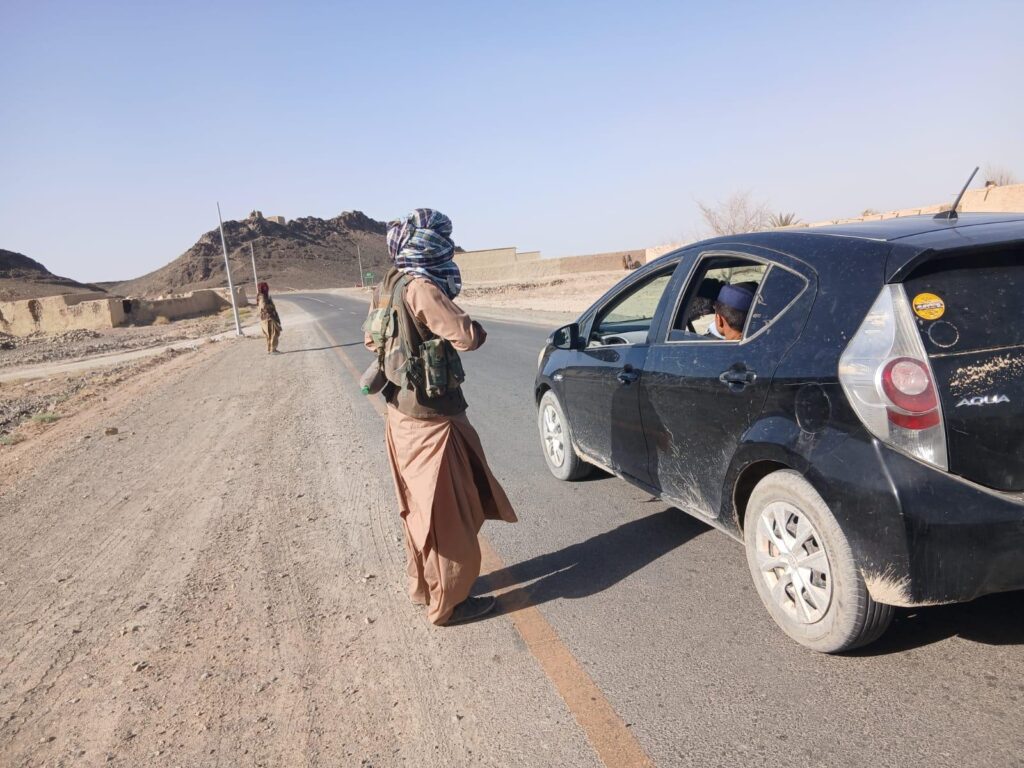
According to the statement, the Quetta attack involved intelligence gathering and precise execution aimed at security forces
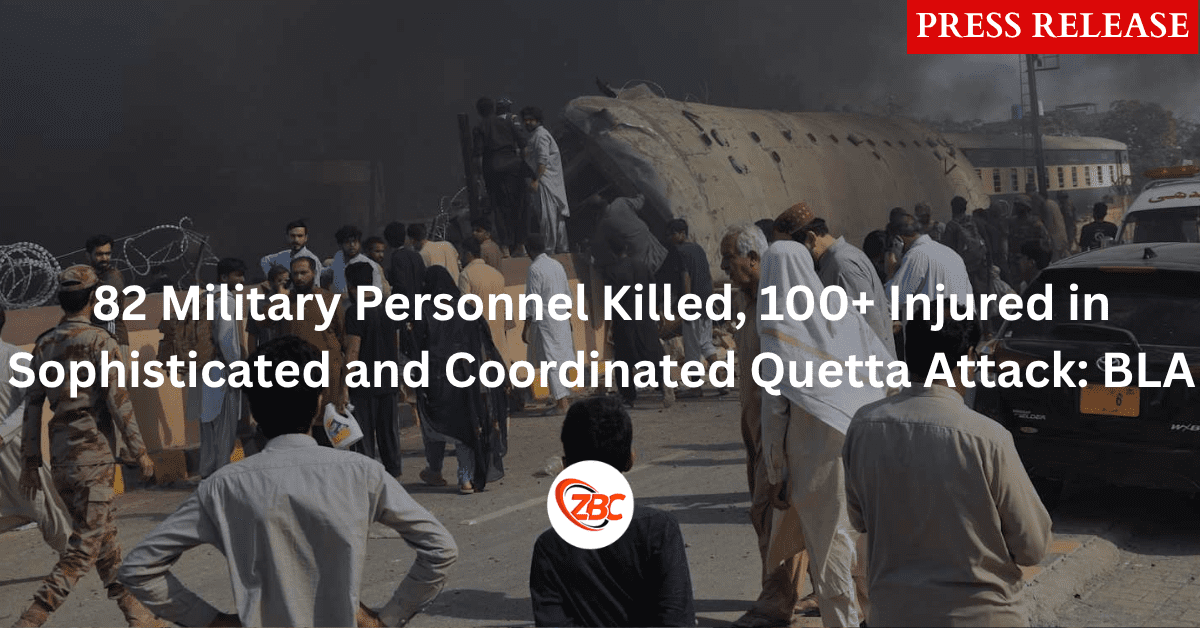
QUETTA: The spokesperson of the Baloch Liberation Army (BLA), Jeeyand Baloch, said in a statement to the media that the organization’s fidayee unit, the Majeed Brigade, and its intelligence wing ZIRAB carried out a highly complex, organized, and coordinated operation on Sunday morning in Quetta city. As a result, a specific military shuttle train transporting personnel of the occupying Pakistani army near Chaman Phatak, in the vicinity of Quetta Cantt Railway Station, was targeted in a suicide attack.
According to the statement, 82 personnel of the occupying forces were killed on the spot, and more than 121 were injured in this devastating attack. The dead and wounded include junior commissioned officers (JCOs), non-commissioned officers (NCOs), soldiers, and newly recruited personnel. The casualties reportedly include personnel from the Frontier Force Regiment, 10 Baloch Regiment, 25 Baloch Regiment, EME Centre, Infantry School, 31 Cavalry, 2 Punjab Regiment, 80 Field Artillery, 50 Signals, 63 Medium Artillery Regiment, and 54 Medium Artillery Regiment.
The spokesperson said the fidayee mission was carried out with great courage and skill by BLA commander Bilal Shahwani. The Baloch Liberation Army accepted responsibility for the operation.
He further stated that this successful operation is a severe blow to the enemy army’s new and secret travel protocol, which was introduced after the March 11, 2025 Jaffar Express hijacking and the November 9, 2024, attack on Quetta Railway Station carried out by Majeed Brigade fidayee fighter Rafiq Baloch. The November 9 operation had paralyzed the enemy’s traditional defensive structure, after which the Pakistani army changed its procedure for transporting military personnel to keep them out of reach of fighters.
Under this newly introduced protocol, a few specially designated railway carriages were shifted into the high-security Quetta Cantt zone several hours before the departure of the Jaffar Express, during the night. In the morning, soldiers going on leave and those newly deployed would board these carriages inside the cantonment’s secure perimeter. These wagons were then attached to a separate engine and brought out as a military shuttle train, which was taken to Quetta Railway Station about half an hour before the departure of the Jaffar Express to be linked with the passenger train. The enemy assumed this arrangement would protect its movements from fighters by using the internal cantonment structure.
The statement further said that, along with this secret arrangement, the army had also begun constructing a high-security wall along both sides of the railway track from the cantonment to the railway station to make ground access impossible. In addition, at the time of the train’s movement, Quick Response Force (QRF) units were deployed with heavy weapons at Quetta Coal Phatak and Pishin Stop Bridge, while foot patrols from the permanent military post at Chaman Phatak secured the entire route.
ZIRAB, the intelligence wing of the BLA, reportedly conducted long-term reconnaissance of this altered security network, timing, and internal communications. The operation reflects what the group claims is its intelligence superiority, stating that ZIRAB has deep penetration into the most secure military zones and decision-making structures of the occupying forces.
The attack was designed with such precision that even a five-minute difference would have made it impossible to strike the target. Commander Bilal Shahwani, also known as Sain, executed the operation based on the precise intelligence provided by ZIRAB, breaking through all security barriers. When the targeted train reached near Chaman Phatak after crossing Coal Phatak at around 8 a.m., he carried out the fidayee attack, according to the statement.
The spokesperson said that the train carried a total of 336 military personnel, and as a result of the attack, the defensive network of the enemy forces, including 74 heavily armed personnel, 7,320 live rounds, and other military equipment, was rendered ineffective within seconds.
He added that the Pakistani army, in an attempt to conceal its alleged intelligence failure and embarrassment over the breach of the heavily fortified cantonment zone, once again resorted to propaganda and false narratives. According to the statement, state media and official spokespeople are portraying military casualties as civilian deaths, which the BLA strongly rejects.
The statement emphasized that the targeted train was not a civilian passenger train but a dedicated military shuttle used exclusively for transporting army personnel from the cantonment, where civilian access is strictly prohibited. It further said that attributing military casualties to civilians is evidence that the occupying forces have lost both military and psychological morale.
The Baloch Liberation Army stated that it is a disciplined and organized national armed force committed to international laws of war and does not target civilians or non-combatants. Its declared targets include only occupying forces, their affiliated institutions, collaborators, and resource-exploitation projects.
The statement added that the timing of the operation—early morning on a Sunday—was deliberately chosen to minimize the presence of civilians.
It further said that the voluntary participation of an experienced field commander in a fidayee mission reflects the institutional evolution and ideological strength of the BLA. It shows that the Baloch national resistance has evolved beyond traditional guerrilla warfare into a modern, scientific, and structured military system where commanders prioritize collective national objectives over individual survival.
It concluded that Commander Bilal Shahwani’s decision will remain a historic example in the struggles of oppressed nations, demonstrating that modern military systems of occupying states can only be countered through intellectual discipline, intelligence reach, sacrifice, and strategic resolve. His long operational history in the Dasht and Kombila fronts, and leadership in Operations Herof I and II in Kalat and Quetta’s Red Zone, further strengthened the movement.
In conclusion, the statement said that the success of this operation once again proves that no matter how many security barriers or protocols the occupying state of Pakistan builds or changes, it cannot stop the determination of the Baloch national armed struggle. The BLA paid tribute to Commander Bilal Shahwani, known as Sain, for this historic success and for elevating the pride of the nation.
It added that their organized, principled, and ideological struggle will continue with full intensity until the establishment of complete sovereignty and ultimate independence of Baloch land.