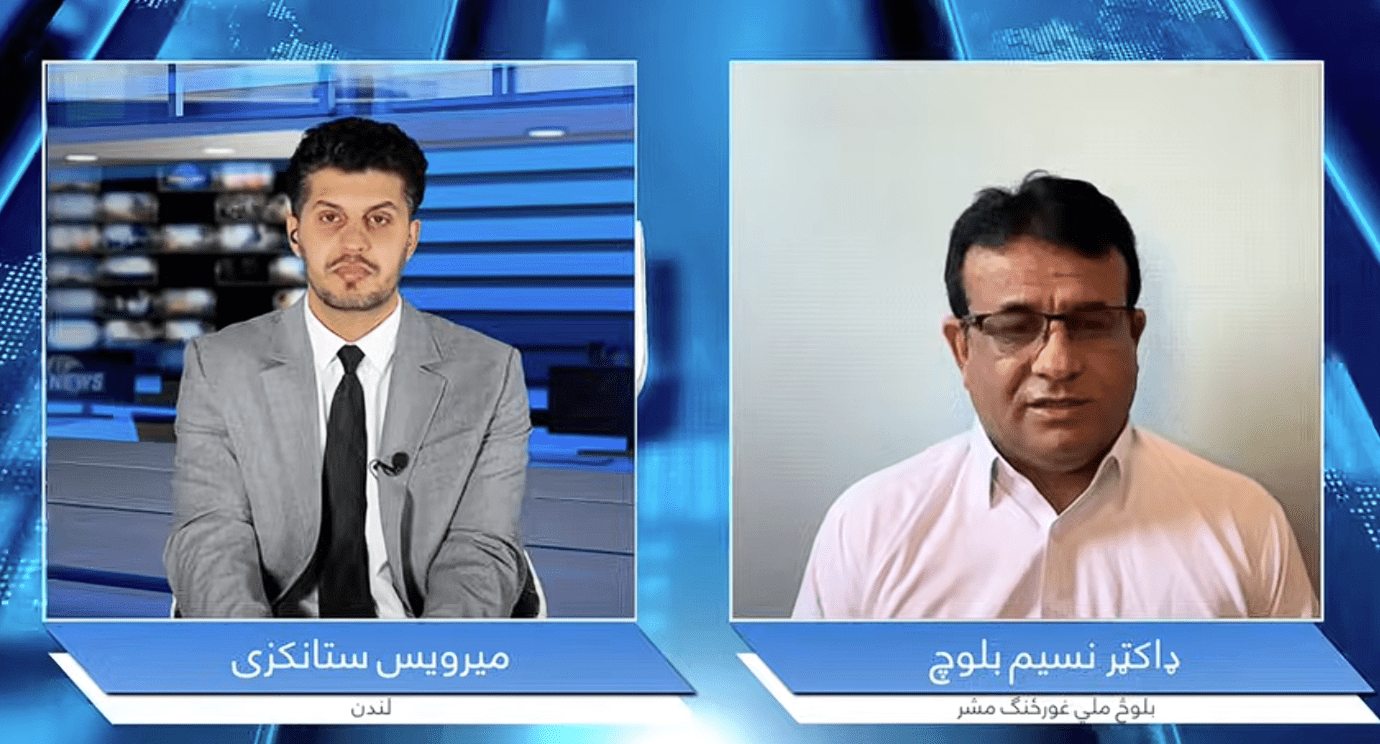
Dr. Naseem Baloch, Chairman of the Baloch National Movement (BNM), gave an exclusive interview to Afghanistan’s Rana TV, conducted by journalist Mirwais Stanikzai, in which he reaffirmed that the Baloch struggle for freedom and self-determination will continue until the people of Balochistan achieve their rights, sovereignty, and dignity. Speaking with Journalist Mirwaise Stanikzai, Dr. Baloch said the movement, which began in 1948 following Pakistan’s military annexation of the region, remains strong despite decades of repression.
Seventy-Five Years of Resistance
Dr. Baloch traced the origins of the struggle to 27 March 1948, when Pakistan forcibly occupied Balochistan shortly after the region had declared independence on 11 August 1947. “This struggle did not begin yesterday, nor is it temporary,” he said. “For more than seven decades, our resistance has adapted to changing circumstances, but its purpose has remained the same, ending forced occupation and reclaiming freedom.”
He emphasized that Pakistan’s labeling of the Baloch movement as terrorism is “misrepresentation.” “The Baloch struggle is not terrorism. It is a legitimate movement of an indigenous people resisting colonial occupation,” Dr. Baloch said.
Human Rights Crisis in Balochistan
The chairman of BNM described the human rights situation in Balochistan as “catastrophic.” According to BNM’s human rights department, Paank, over 1,000 cases of enforced disappearances occurred in 2025 alone, with more than 200 extrajudicial killings reported. Mass graves have been discovered in Panjgur, Tootak Khuzdar, Dera Bugti, and other areas of Balochistan, including 169 bodies recovered in Tootak, many unidentified. “This is nothing short of genocide,” he said.
Dr. Baloch also highlighted the growing role of women in the resistance. “Baloch women mothers, sisters, wives have joined the movement because their loved ones were disappeared or killed. Even peaceful activism is met with arrests and imprisonment,” he said.
International Community and Accountability
Dr. Baloch criticized the international community for failing to take effective action. “Global attention shifts from one crisis to another Palestine, Syria, Ukraine while Balochistan remains under a media blackout. Statements and letters are made, but real pressure is missing,” he said.
He stressed that without international intervention, Pakistan will continue to act “as a ruthless and lawless state,” drawing parallels with Bangladesh in 1971. “Silence and inaction only allow oppression to continue. Without international pressure, Pakistan will feel free to act without accountability,” Dr. Baloch said.
Strength of the Baloch Nation
Responding to Pakistan’s emphasis on military strength, Dr. Baloch said, “An army cannot defeat a nation. Balochistan is a nation. The struggle we continue today will make it easier for our children tomorrow and bring them closer to freedom.” He cited historical examples, including the United States’ failures in Vietnam and Afghanistan, to underscore that military force alone cannot crush a people determined to achieve independence.
Solidarity and Shared Struggles
Dr. Baloch rejected portrayals of the conflict as ethnic in nature. He noted that other movements in Pakistan, such as the Pashtun Tahafuz Movement (PTM), share similar goals of rights, justice, and dignity. “Cooperation is possible through mutual recognition of shared suffering and demands,” he said, emphasizing historic and ongoing solidarity between Baloch and Afghan communities.
Criticism of Pakistan’s Development Agenda
Dr. Baloch criticized Pakistan’s development projects, particularly the China–Pakistan Economic Corridor (CPEC). He said, “CPEC is nothing more than a joke. Gwadar, central to the project, lacks basic necessities like clean drinking water. The port is effectively under Chinese control while local people face restricted access, checkpoints, and surveillance.” He argued that these projects prioritize state and foreign interests over the needs of the Baloch people.
A Message to the World
Dr. Baloch concluded with a clear message to the international community: “The Baloch nation cannot be eliminated. Our movement cannot be crushed. We urge the world to intervene and prevent further oppression and bloodshed. History shows that unchecked military power leads to tragedy, and we will not allow that to happen in Balochistan.”