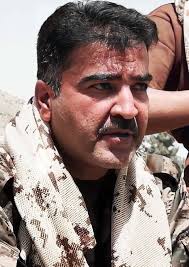
CANBERRA/QUETTA: The Australian government has imposed counter-terrorism financing sanctions on the Baloch Liberation Army (BLA) and three of its senior leaders over their alleged involvement in attacks across Pakistan, making Australia the fourth country to formally designate the group as a terrorist organization.
The Australian government named BLACommander-in-Chief Basheer Zeb Baloch, the group’s spokesperson Jeeyand Baloch and another figure identified as Hammal Baloch as sanctioned individuals under its counter-terrorism financing framework.
The designation makes Australia the fourth country to formally list the BLA as a terrorist organization, following Pakistan, the United Kingdom and the United States. Observers describe the BLA as one of the most organized militant groups operating in the region.
The BLA carried out one of the largest coordinated suicide attacks in different areas of Pakistan and during operations across Balochistan in February this year. The group states it is fighting for the independence of Balochistan and has continued attacks targeting Pakistani military personnel, financial infrastructure and foreign nationals in Balochistan.
Pakistan alleges that the BLA operates as a proxy for India and Afghanistan an accusation both countries deny, describing the conflict as Pakistan’s internal matter. The BLA has not responded to the Australian sanctions at the time of reporting.
It is noteworthy that armed separatist groups in Balochistan have been growing increasingly organized and active in recent years, continuously targeting Pakistani security forces, military installations and critical economic infrastructure across Balochistan.
The two most active groups are the Baloch Liberation Army and the Balochistan Liberation Front (BLF), both of which have repeatedly targeted major international projects in the region. The China-Pakistan Economic Corridor (CPEC), the Reko Diq mining project and the Saindak copper-gold project have all come under sustained attack, raising serious concerns among international investors and partner governments.
One of the most significant recent attacks was the Nokundi attack, claimed by the Balochistan Liberation Front, in which six suicide bombers struck simultaneously, inflicting what analysts described as heavy losses on Pakistani forces. The attack was significant enough that Barrick Gold, the multinational mining company, subsequently reviewed its operations in Balochistan citing deteriorating security conditions — a development with major implications for foreign investment in Balochistan.
Senior analysts indicate that the growing frequency and sophistication of these attacks have been a significant contributing factor to what many observers now describe as the stalling of the CPEC project. Repeated strikes on CPEC-related infrastructure, workers and security personnel have raised serious questions about the viability and long-term security of the corridor, which was once projected as a transformative economic initiative for both Pakistan and China.