HANNOVER, Germany: Ayesha Siddiqa Says She No Longer Trusts Pakistani State as Journalist Highlights Balochistan Media Blackout at BNM Conference
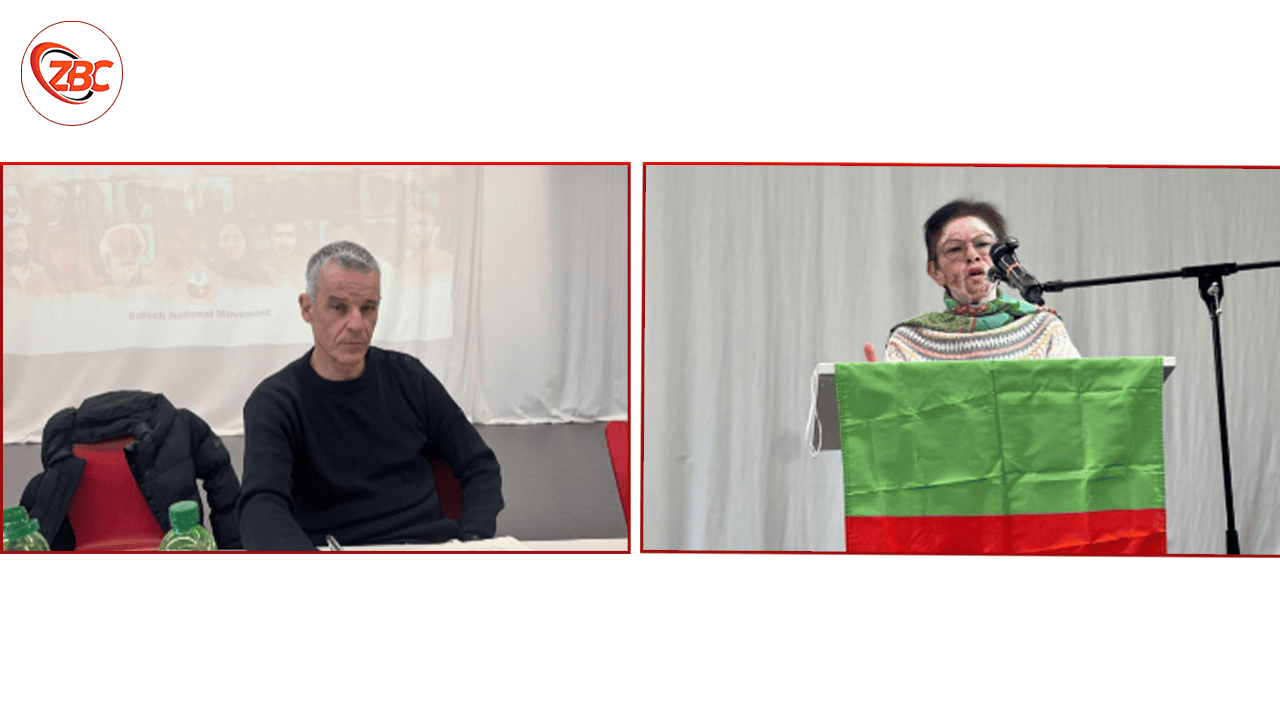
Political analyst and author Ayesha Siddiqa said she no longer believes the Pakistani state can protect its citizens or address their grievances, while Spanish journalist Karlos Zurutuza said Balochistan remains almost invisible in international media. Both spoke at a Baloch National Movement (BNM) conference marking Baloch Martyrs’ Day.
Ayesha Siddiqa said she has attended the BNM’s annual event for years in solidarity with the Baloch but this time wanted to share her own sense of personal tragedy. Forcibly taking people’s sons and daughters from their parents, she said, is an act for which there can be no justification.
She recalled joining a protest in Islamabad around 2012-2014, when Mama Qadir the chairman of Voice for Baloch Missing Persons (VBMP) and relatives of the disappeared marched on foot from Quetta. She said she took part partly to stand up for Pakistan, because without standing with the marchers, she would have had no moral ground to ask the Baloch to remain part of the country.
More than a decade later, she said, that sense of belonging has gone. “What am I protecting?” she asked, adding that the state’s violence and authoritarian nature have expanded.
Siddiqa described Pakistan as a colonial and rent-seeking state, saying it was a bureaucratic polity from the start rather than a genuine political state, and that the military’s role was not accidental. She said the current system has taken the form of “constitutional militarism”.
She also criticised political parties and parliament, saying they have effectively surrendered. Parliament, she said, has willingly approved media restrictions and other measures demanded by the military, while the judiciary and civil bureaucracy have been weakened and an alliance of military and civilian elites dominates the distribution of resources.
Linking enforced disappearances and repression to resource extraction, Siddiqa said the state is ready to sell mineral resources from Balochistan, Pakhtunkhwa and other areas without public consultation or accountability. She said fear, silence and repression are used to sustain this process. Referring to a recent Islamabad conference attended by Field Marshal Asim Munir, she said minerals were being offered without taking parliament into confidence or consulting affected communities.
She compared Baloch mothers campaigning against enforced disappearances with Argentina’s Mothers of the Plaza de Mayo, saying mothers in both places were denied information, subjected to accusations and ignored. She ended by paying tribute to Baloch women who continue to seek the recovery of their missing relatives and justice despite state pressure and personal risk.
Spanish journalist Karlos Zurutuza, speaking at the BNM conference, described the dangers faced by local journalists in Balochistan. He cited the case of Karima Baloch, who died in Canada after going into exile, and a Baloch journalist found dead in Sweden. He said colleagues have faced financial pressure on editors, threats to their families and self-censorship.
Citing Reporters Without Borders, Zurutuza said Pakistan ranks 153rd on the World Press Freedom Index and that censorship in Balochistan has become bureaucratised, with media recently required to obtain clearance before reporting on security forces. He also cited Freedom Network figures stating that at least 40 journalists have been killed in Balochistan over the past two decades.
He also mentioned Mahrang Baloch, who he said was in contact with him before her arrest and remains imprisoned despite a Nobel Peace Prize nomination.
Rather than appealing to the United Nations, Zurutuza told the conference that the practical step is for journalists to train local reporters in secure communication and build networks so their stories reach editors who recognise the importance of the Baloch issue. He said he has done similar training in Libya, Iraq and Nagorno-Karabakh.