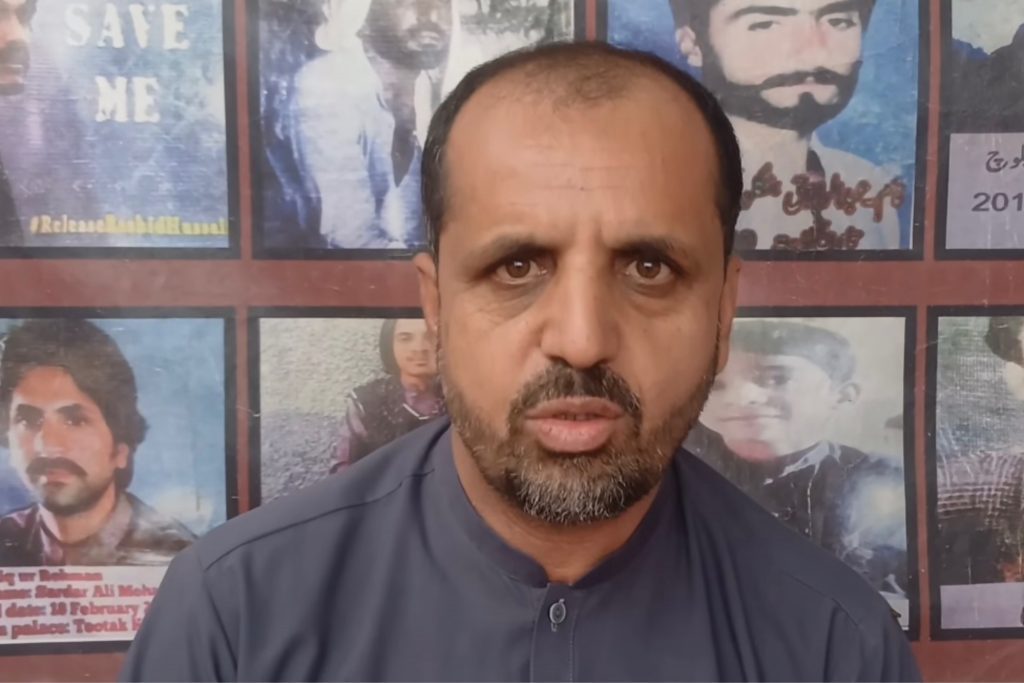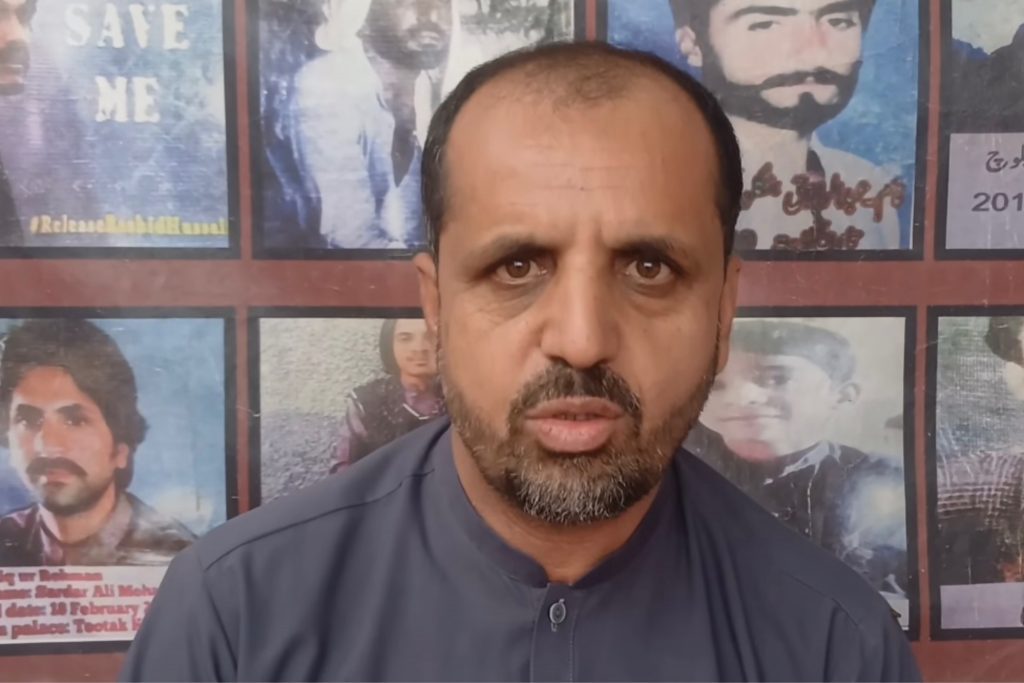
QUETTA,BALOCHISTAN:Nasrullah Baloch, Chairman of Voice for Baloch Missing Persons (VBMP), stated that the organization is being threatened to shut down its protest camp and abandon its peaceful struggle against enforced disappearances. He said these actions are attempts to silence the voice of human rights.
However, he made it clear that the movement against enforced disappearances will continue no matter what.
The VBMP protest camp in front of Quetta Press Club entered its 6172nd consecutive day on Thursday, led by executive committee member Niaz Muhammad.
People from various walks of life visited the camp to express solidarity with the families of the missing persons. Participants demanded an end to enforced disappearances and the immediate recovery of all missing individuals.
Speakers emphasized that despite all pressures, the protest camp and peaceful struggle will persist.
Dr. Sabiha Baloch, a central leader of the Baloch Solidarity Committee, condemned enforced disappearances as unconstitutional and unethical acts carried out openly by state institutions. She lamented that those raising their voices against this oppression face threats, harassment, arrests, and repression.
She highlighted that Nasrullah Baloch’s statement about threats to close the protest camp reflects the state’s attitude to silence any voice advocating for human rights, justice and life.
Dr. Baloch described the protest camp, ongoing for over 6172 days, as a symbol of the pain, waiting, and hope of thousands of familiesmothers, sisters, children, and elders demanding the return of their loved ones. Instead of healing their wounds, these families are being threatened.
She added that the Baloch Yakjehti Committee leadership has been imprisoned for the past year simply for raising a peaceful voice against this oppression. Harassment and threats against VBMP leaders are shameful acts. If the state genuinely wants to resolve the issue, it should end this heinous crime rather than silence peaceful voices.
Dr. Baloch emphasized that while threats, jails, and oppression may try to silence voices, a mother cannot be deprived of her child’s memory, nor a sister stop searching for her brother. No one can give up searching for their loved ones. Can living people be forgotten? Can the desire to live be abandoned?
She concluded by stating that silence against this oppression is impossible. As long as enforced disappearances continue, resistance and the call for justice will also remain alive.