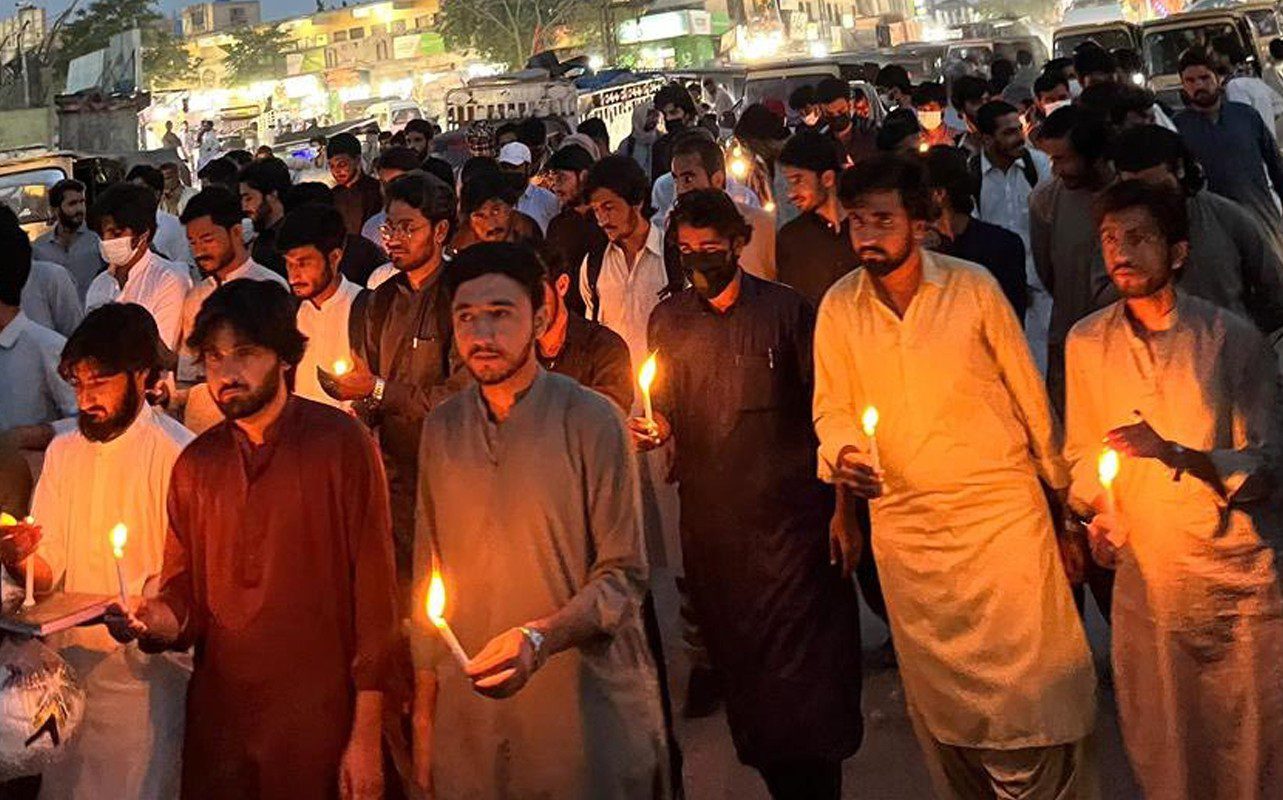
QUETTA / NOSHKI: Hundreds of students, educators and citizens lit candles and marched through the streets of Quetta and Noshki on Tuesday, paying tribute to Professor Ghamkhwar Hayat, the Baloch poet and intellectual killed a day earlier in a targeted shooting in Noshki’s Killi Mengal area.
The outpouring of grief stretched across two cities and united multiple student organizations, reflecting how deeply the slain professor’s literary legacy had taken root in Balochistan’s academic and cultural community.
In Quetta, the Baloch Students Organizations Alliance a coalition comprising the Baloch Students Action Committee (BSAC), Baloch Students Organization (BSO), and BSO Pajjar organized a condolence walk in Professor Hayat’s honor.
Participants marched solemnly through the city before gathering at a final point where candles were lit in tribute to his decades of service to Baloch literature and education.
Speaking at the event, a representative of BSAC emphasized the irreplaceable role intellectuals play in any society.
“As a student organization, we believe our teachers, professors, scholars, and intellectuals are the foundational pillars of our society and nation without them, we cannot move forward in any capacity,” the representative said. “Professor Ghamkhwar Hayat’s passing is a devastating loss for our literary community.”
In Noshki, the city where Professor Hayat was born, raised, and ultimately killed, the response was equally powerful and deeply personal.
Large crowds of students and residents poured into the streets, carrying photographs of the slain professor as they marched through the city’s main roads. Speakers at the march described his murder as an irreparable blow to Brahui literature the regional language to which he had devoted much of his scholarly work.
Participants called for accountability and demanded that those responsible for his killing be brought to justice.
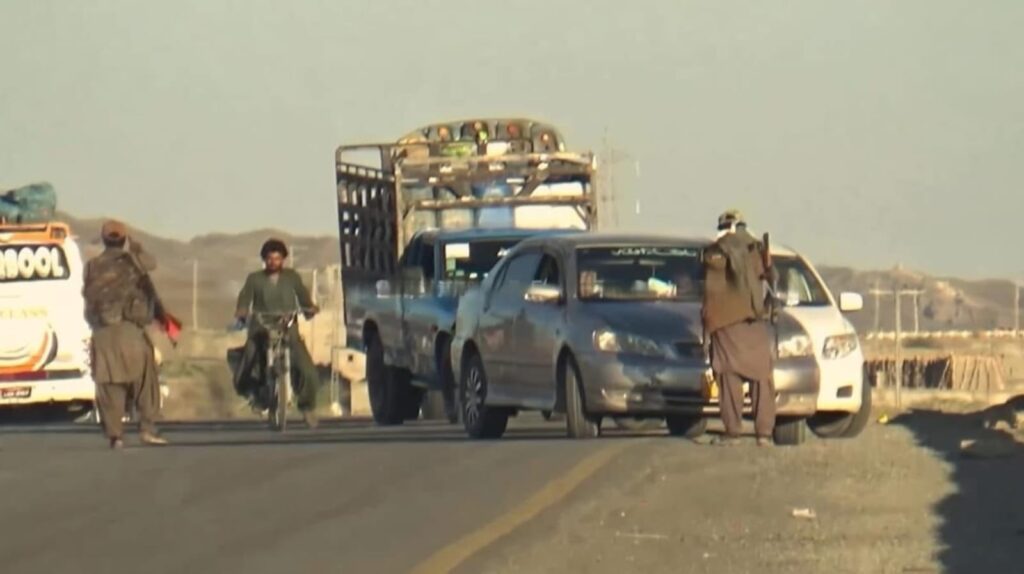
Professor Ghamkhwar Hayat was shot and killed on Monday in the Killi Mengal area of Noshki. According to eyewitness he was gunned down by armed men described by activists as state-backed death squads.
He was the founder of the Raskoh Literary Council, a prominent cultural institution in Balochistan that had served as a hub for poetry, intellectual exchange, and the promotion of Baloch and Brahui language and literature.
Tuesday’s vigils and marches signaled that despite the fear such killings are intended to create, Balochistan’s student and intellectual community was unwilling to be silenced.
Organizers made clear that the gatherings were not only acts of mourning but also of resistance a message to those in power that the elimination of a scholar does not eliminate his ideas.