
By: Umair Baloch
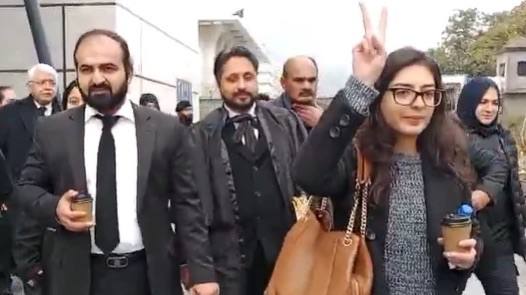
ISLAMABAD: An Islamabad sessions court has sentenced prominent human rights lawyer Imaan Mazari and her husband, advocate Hadi Ali Chatha, to long prison terms under Pakistan’s cybercrime laws, a ruling that has sparked widespread debate over freedom of expression, digital dissent, and the application of the Prevention of Electronic Crimes Act (PECA).
The verdict, delivered in January 2026, is being described by legal observers as one of the most far‑reaching convictions linked to online political speech in recent years.
The Court’s Decision
Additional District and Sessions Judge Afzal Majoka sentenced Mazari and Chatha to a total of 17 years of rigorous imprisonment each under multiple sections of PECA. The sentences will run concurrently, meaning both will serve 10 years in prison.
Sentence breakdown:
- PECA Section 9: Five years’ imprisonment each
- PECA Section 10: Ten years’ imprisonment each
- PECA Section 26‑A: Two years’ imprisonment each
In addition to prison terms, the court imposed a combined fine of PKR 9 million on the couple.
Mazari and Chatha appeared before the court via video link and formally boycotted the proceedings, stating that they had lost confidence in the fairness of the trial.
Prosecution Allegations
According to the prosecution and the written judgment, the accused were found guilty of posting and circulating content on social media deemed “anti‑state”.
The court held that the material:
- Promoted or amplified narratives linked to proscribed organisations, including the Balochistan Liberation Army (BLA) and the Tehreek‑e‑Taliban Pakistan (TTP)
- Echoed political messaging associated with the Pashtun Tahafuz Movement (PTM) and figures such as Mahrang Baloch, Ali Wazir, and Manzoor Pashteen
Prosecutors argued that the social‑media activity was coordinated and deliberate, aimed at undermining public trust in state institutions, inciting unrest, and contributing to law‑and‑order challenges. The court ruled that the prosecution had successfully established these charges.
How the Case Originated
The case was registered on 22 August on the complaint of a sub‑inspector of the National Cyber Crime Investigation Authority (NCCIA).
The First Information Report (FIR) alleged sustained online activity by Mazari, Chatha, and others that targeted state institutions and promoted the narratives of banned organisations.
Defence Objections During Trial
Throughout the proceedings, the defence repeatedly challenged the conduct of the trial.
On 5 December, Mazari told the court that she believed the case was being conducted one‑sidedly and that a conviction was inevitable. She formally requested that the matter be transferred to another court.
Chatha raised objections regarding the handling of his statement under Section 342 of the Criminal Procedure Code, which allows an accused to respond to evidence presented against them. He told the court that:
- Responses under Section 342 were submitted by the State Counsel rather than the accused
- Defence questionnaires were routed through the prosecution
- He was denied timely access to cross‑examination material
The court later issued a 33‑question questionnaire to the accused.
Chatha also submitted a list of proposed defence witnesses, including journalists, political figures, and relatives of missing persons. The defence maintained that these witnesses were not summoned.
Arrests and Judicial Remand
A day before the verdict, Islamabad Police arrested Mazari and Chatha in a separate case.
They were subsequently produced before the Anti‑Terrorism Court (ATC), where police sought a seven‑day physical remand. The request was rejected, and the court ordered both accused to be sent to jail on a 14‑day judicial remand.
Police said the arrests were linked to allegations of disturbing law and order, incitement, and interference in government affairs.
Arrest Near Islamabad High Court
The arrests followed earlier controversial detentions near the Serena Hotel, shortly after Mazari and Chatha had left the Islamabad High Court, despite existing protective bail orders.
At the time of detention, the President and Secretary of the Islamabad High Court Bar Association were present in the same vehicle. Lawyers and family members said no FIR was shown to the accused at the time of arrest.
To avoid detention earlier, the couple had spent three consecutive nights inside the Islamabad High Court premises.
High Court’s Role
Justice Azam Khan of the Islamabad High Court had earlier:
- Cancelled arrest warrants issued by a lower court
- Granted protective bail to Mazari and Chatha in a Kohsar Police Station case
- Directed that arrests should not be made without disclosure of pending cases
Subsequent police actions, however, raised questions among lawyers about compliance with the high court’s orders.
Political and Public Reaction
Federal Information Minister Atta Tarar welcomed the verdict, describing it as “the first official and final outcome of PECA.” Writing on social media, he added: “You reap what you sow” and urged people to “fear Allah.”
The ruling drew sharp criticism from journalists, lawyers, and rights activists. Anchor Asma Shirazi described the verdict as an example of double standards, while journalists Matiullah Jan and Mariana Babar questioned the legality of the arrests and the effectiveness of judicial safeguards.
Several bar associations announced boycotts and strikes in protest. Social media reaction remained divided, with supporters calling the verdict the enforcement of the rule of law and critics describing it as a crackdown on dissent.
Who Is Imaan Mazari?
Imaan Mazari is a Lahore‑born human rights lawyer known for representing families of victims of enforced disappearances, alleged custodial abuse, and political activists. She is the daughter of former federal minister Shireen Mazari.
Her legal work and outspoken criticism of state institutions have frequently brought her into confrontation with law‑enforcement authorities.
What Happens Next
Legal experts expect the convictions to be challenged in higher courts. Analysts say the case could set an important precedent for how Pakistan’s cybercrime laws are applied to political speech online.
The outcome of any appeals is likely to have long‑term implications for digital rights, freedom of expression, and judicial oversight in Pakistan.
This report is based on court documents, official statements, and accounts from lawyers and journalists following the case.