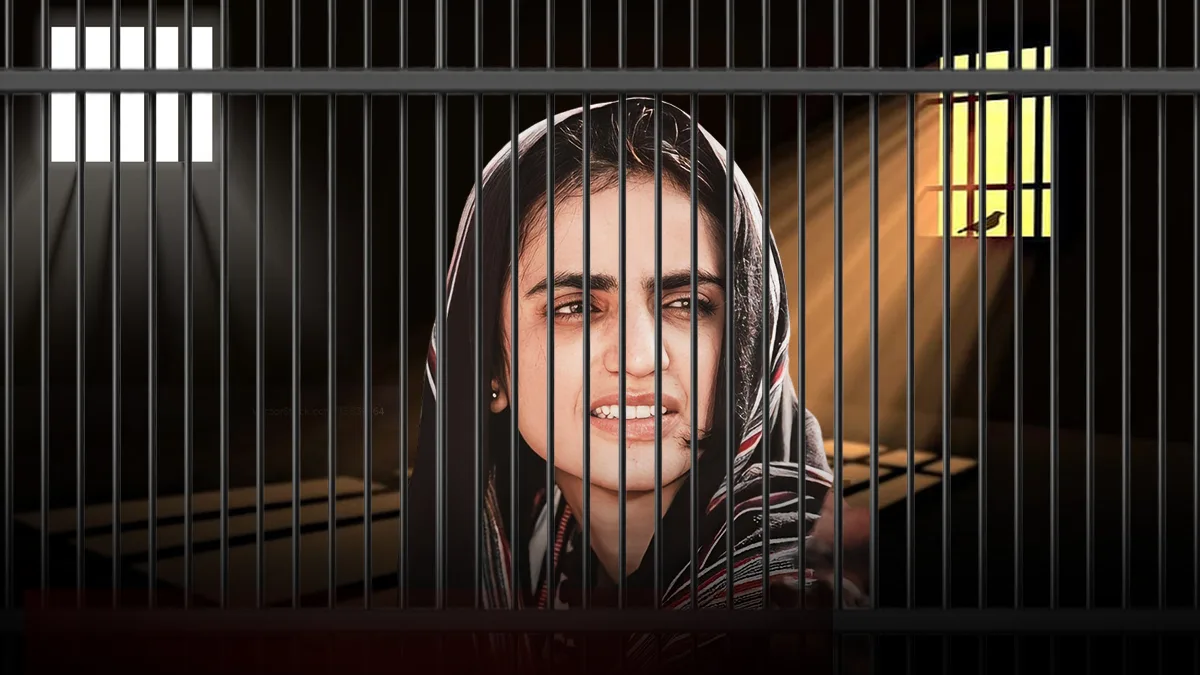
QUETTA, BALOCHISTAN: Dr. Mahrang Baloch, the captive leader of the Baloch Yakjehti Committee (BYC), issued a detailed statement on June 20 from Huda Jail, Quetta, shedding light on the ongoing injustices faced by peaceful political activists in Balochistan. Marking the eighth day of their sit-in protest inside the jail, Dr. Mahrang, along with fellow activists including Babarag Baloch, Beebow Baloch, Gulzadi Baloch, and Sabghatullah Baloch, continues to resist what she describes as the state’s oppressive legal tactics.
In her statement, Dr. Mahrang revealed that on June 13, the activists learned their cases were being transferred to faceless trials—an opaque judicial process lacking transparency and fairness. In protest, they refused to return to their barracks and have maintained a peaceful sit-in for 192 hours within the jail premises.
She emphasized that this protest revives the collective memory of their resistance against decades of enforced disappearances, killings and state violence. Remembering those who remained steadfast despite oppression, including mothers who endured separation from loved ones without losing hope, Dr. Mahrang connected their struggle to historic protests such as Raji Muchi and the March 22 Quetta sit-ins, where peaceful demonstrators faced brutal force.
Dr. Mahrang outlined two primary demands: that their cases be heard in open courts and that Judge Muhammad Ali Mubin of the Anti-Terrorism Court be transferred. Initially detained under the 3MPO law and held on remand for 77 days, their jail trials began on October 11. However, efforts to move their cases to faceless trials through a June 12 notification by the Chief Secretary threaten their right to a fair hearing.
Questioning the state’s claim to democratic law, she highlighted recent amendments to the Anti-Terrorism Act allowing prolonged detention based merely on suspicion. Hundreds of Baloch youth and women, including her cousin Saifullah, remain imprisoned under these laws in internment centers. This raises fundamental concerns about whether the law protects citizens’ rights or merely expands state power.
Dr. Mahrang also exposed pressures during court proceedings, such as the Balochistan Prosecutor General urging rapid trial conclusions and the rejection of bail applications despite prior approvals in similar cases. She criticized the appointment of government lawyers to represent them without consent, denying them their legal right to choose defense counsel.
Despite facing harassment, threats, and even violence against their lawyers, BYC activists remain unwavering in their political stance. Dr. Mahrang reiterated that their protest inside the jail is not just for their own release but for defending the fundamental rights of the Baloch people.
She condemned the state’s attempts to link the BYC to terrorism through media trials, while simultaneously violating fair trial principles and obstructing justice. The fourteen-month detention and extraordinary judicial obstacles reflect a system used to suppress peaceful political activism.
Highlighting the judiciary’s controversial role in Pakistan’s history, Dr. Mahrang called for judicial independence free from political and military influence a key pillar of democracy. She pointed out that the state apparatus, including parliament and bureaucracy, has become part of an unaccountable power structure that sustains oppression rather than justice.
In conclusion, Dr. Mahrang stated that their sit-in, imprisonment, and resistance are part of the ongoing political struggle for rights and justice. She affirmed that the fight for justice lives on in every heart that refuses to bow before oppression and that imprisonment and violence can never silence the legitimate demands of the oppressed.
This statement by Dr. Mahrang Baloch reaffirms the BYC’s commitment to democratic principles and human rights, exposing the state’s legal system as a tool of oppression against peaceful political activists in Balochistan.
The Baloch Yakjehti Committee released a statement expressing growing concerns about the health of BYC leader Bebarg Baloch amid the ongoing jail sit-in protest.
Today marks the ninth day of the ongoing sit-in protest inside the Hudda jail premises by BYC leaders including Dr. Mahrang Baloch, Bebarg Baloch, Shah Jee Baloch, Beebow Baloch, and Gulzadi Baloch.
The detained BYC leaders launched this protest against the faceless trials and the continued denial of their fundamental legal rights. Despite their clear rejection of these proceedings and the lawyers appointed on their behalf, court proceedings have continued without their consent, while state-appointed lawyers have been imposed upon them against their wishes.
Faceless trials not only violate the principles of transparent justice but also deprive detainees of their fundamental right to defend themselves. When families are denied access to meet their loved ones and judicial proceedings are conducted away from public scrutiny, concerns regarding fairness and due process become even more serious.
The current situation began when the Prosecutor General of Balochistan appeared during a trial proceeding, pressured the presiding judge, and stated that he had been sent by the Home Department of Balochistan. Following this intervention, the trials were converted into faceless proceedings with day-to-day hearings.
For the past nine days, Dr. Mahrang Baloch and the other detained BYC leaders have continued their protest under extreme weather conditions and without basic facilities, enduring the scorching heat. Through this peaceful protest, they are demanding transparent and fair trials and the restoration of their legal rights.
There is also growing concern regarding the health of the protesters. In particular, Bebarg Baloch, who is a person with disabilities, continues to participate in the sit-in despite his condition. He previously underwent an operation, and he is now experiencing an infection as a result of sitting in the protest. This raises serious concerns regarding his deteriorating health and overall well-being.
BYC remains deeply concerned about the health and safety of all the detained BYC leaders, who continue their peaceful protest under harsh conditions while seeking the protection of their constitutional and legal rights.