WRITER: BASIT ZAHEER BALOCCH
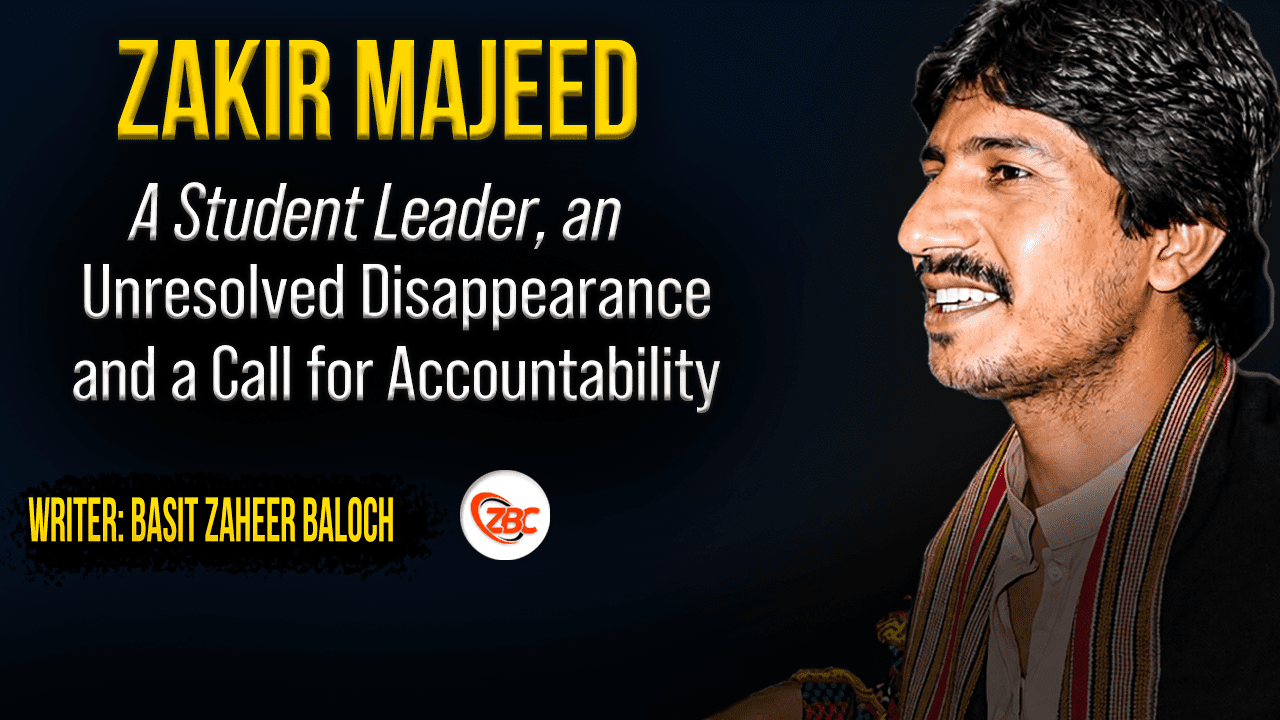
On June 8, 2009, Zakir Majeed, a university student and a leader among students, was reportedly taken into custody by people believed to be working with intelligence agencies in the Mastung area of Balochistan, Pakistan. He was with two friends at the time. His friends, Waheed and Basit, were later released. Zakir’s whereabouts have remained a mystery ever since.
At that time Zakir was studying for a master’s degree in English literature. By now he would have finished his studies. Probably moved into a career in academics or public life. Instead, his disappearance has become one of the cases of enforced disappearance in the region, leaving his family and community in a long period of uncertainty and pain.
Despite court petitions, police reports, public demonstrations and long marches from Quetta to Islamabad, Zakir’s family and friends have not been able to get any reliable information about what happened to him. Many appeals to institutions and international human rights groups have not led to his recovery. With these efforts authorities have consistently remained silent on any formal charges, detention records or health updates.
Zakir Majeed is remembered by those who knew him not as a student who was aware of politics but also as a young man with strong personal qualities. He was a student leader known for being calm, composed and deeply committed to his peers. He was always smiling in tough situations and preferred to take action rather than talk. His friends describe him as an honest and hard-working someone who believed in steady effort rather than just talking.
People close to him often recall that whenever they saw him he seemed to be struggling but never gave up. His persistence in conditions left a lasting impression on those around him. One of his colleagues reflected that they feel lucky to have worked with him and to have learned from his approach to life and leadership.
One thing that people remember him for is the message he shared with students: don’t lose hope and keep struggling because tomorrow belongs to you. This belief in perseverance and optimism has become a defining part of how he’s remembered.
Zakir’s disappearance has also raised concerns about enforced disappearances and whether legal and humanitarian mechanisms can address cases. His case has been cited in discussions about accountability, transparency and the rights of citizens in conflict-affected regions. Critics argue that prolonged silence and lack of resolution in cases risk deepening mistrust between the state and affected communities, further complicating already fragile social and political dynamics.
Then a decade later, the lack of answers continues to weigh heavily not only on his family but also on a wider society still seeking clarity, justice and closure.