UNITED NATIONS: Pakistan and India engaged in a sharp diplomatic exchange at the UN General Assembly on Friday during the presentation of the UN Security Council’s Annual Report, with both sides offering opposing positions on the Kashmir dispute before the international body.
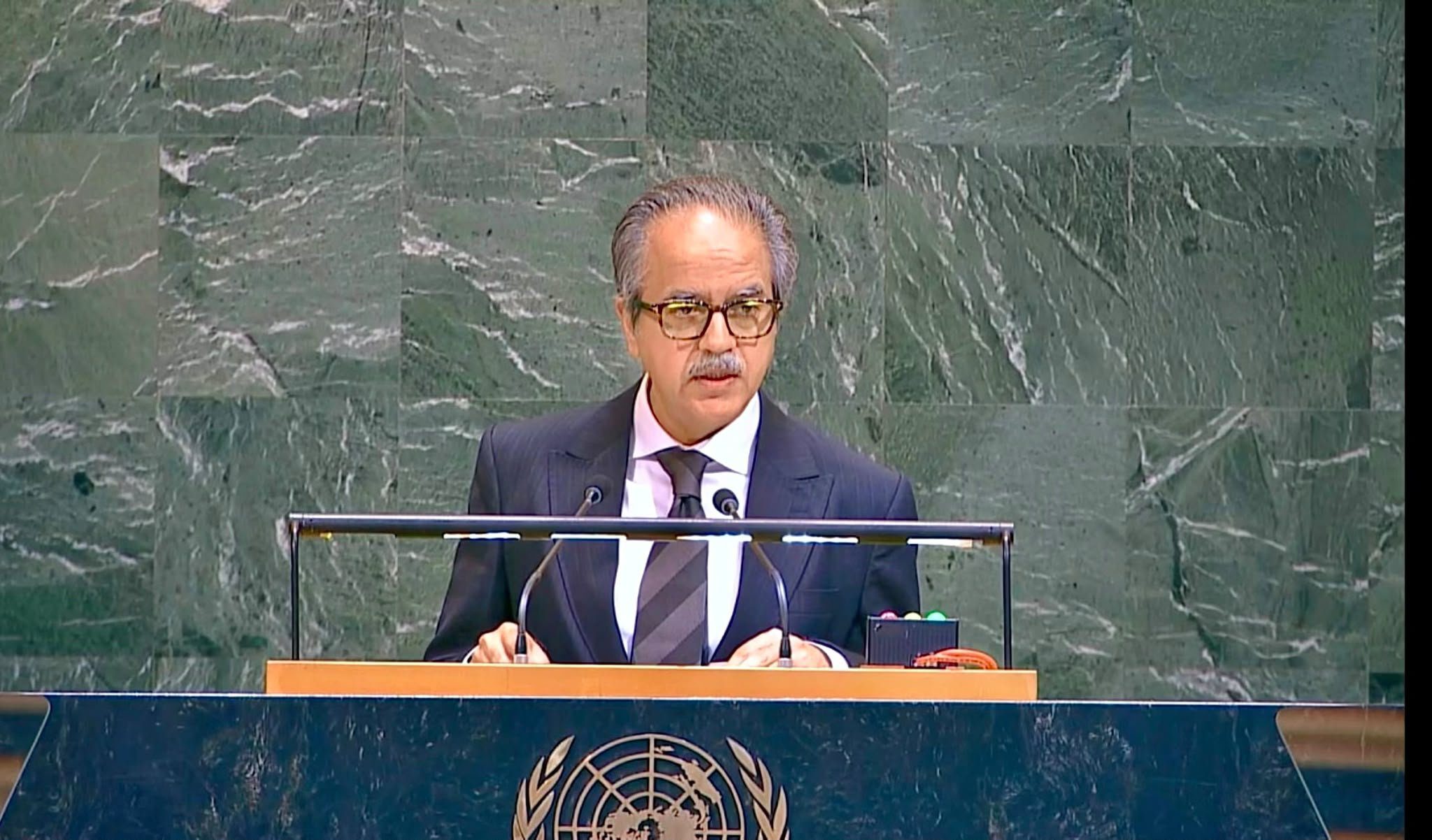
Pakistan’s Permanent Representative Ambassador Asim Iftikhar Ahmad called for a just resolution of the Kashmir dispute in accordance with relevant UNSC resolutions and the aspirations of the Kashmiri people. He noted that more than 20 communications concerning the India-Pakistan question were brought before the UNSC during the reporting period and that the council held closed consultations on the matter in May 2025 underscoring, he said, that Kashmir remains actively on the council’s agenda after more than seven decades.
Pakistan’s Political Coordinator Gul Qaiser Sarwani, exercising the right of reply, said Kashmir “remains an internationally recognised dispute on the agenda of the Security Council” and accused India of refusing to implement UNSC resolutions calling for a UN-supervised plebiscite. He further alleged ongoing human rights violations in the region, including arbitrary detentions, demographic changes, and restrictions on fundamental freedoms, referencing a UN Special Procedures communication from October 2025.
Sarwani also accused India of “sponsoring terrorism in Pakistan, conducting state-backed assassination campaigns in foreign countries, and destabilising activities in the region.”
India’s UN envoy Harish Parvathaneni rejected Pakistan’s remarks, accusing Islamabad of misusing UN platforms for what he described as divisive political interests. He firmly asserted that Jammu and Kashmir “was, is and will always remain an integral and inalienable part of India,” dismissing Pakistan’s framing of the issue as an internationally unresolved dispute.
Ambassador Ahmad also raised the Palestine question, citing UNSC Resolution 2083 adopted in November 2025, and called for broader Security Council reform. He opposed the expansion of permanent seats and veto powers, summarising Pakistan’s position as “Reform for all, privilege for none.”