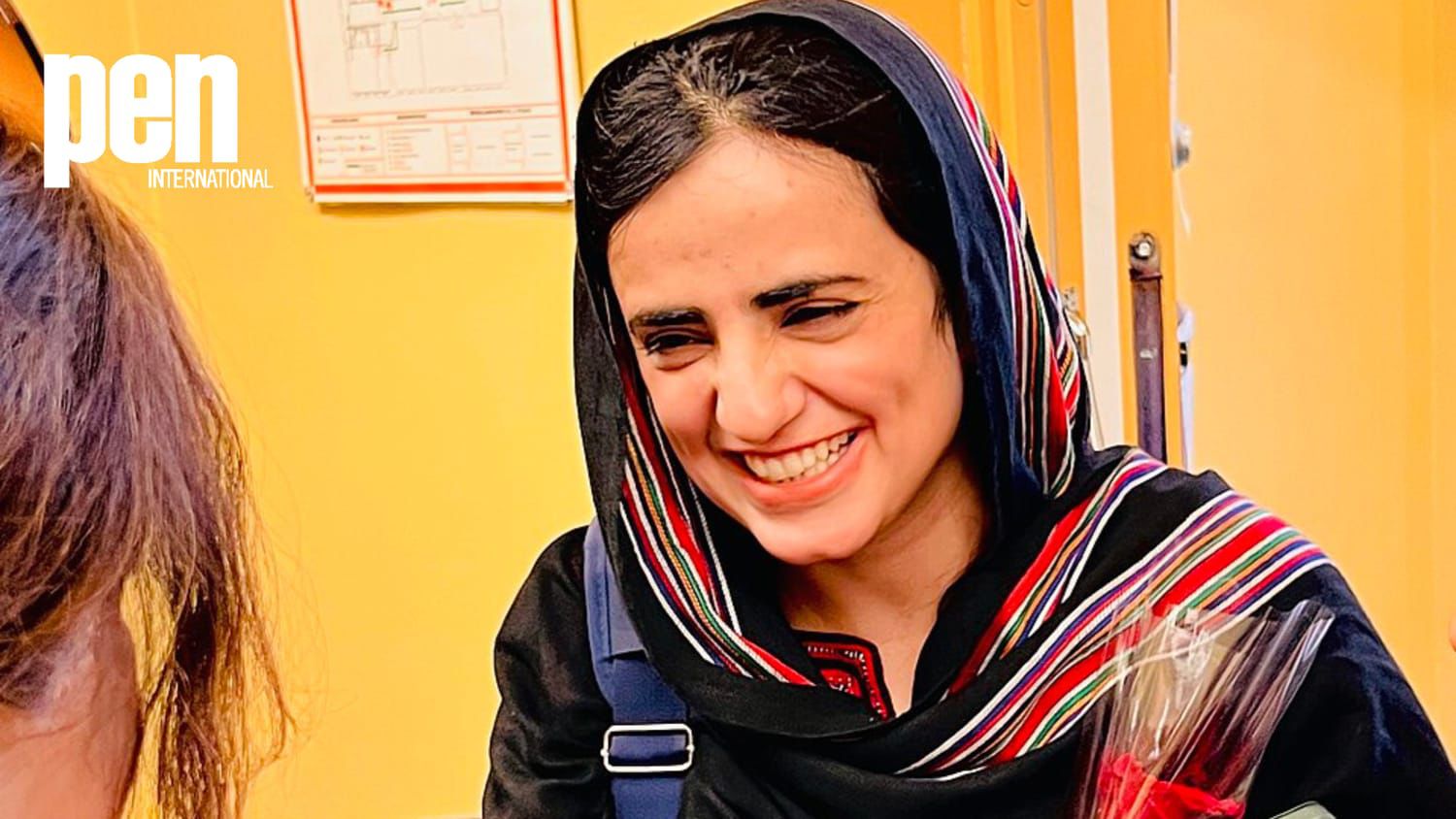
LONDON: PEN International, one of the world’s oldest and most respected literary and human rights organisations, has accused Pakistan of systematically misusing security and anti-terrorism laws to suppress peaceful political activism, amid growing international concern over the treatment of civil society members in Balochistan.
The organisation’s statement came in direct response to the arrest and ongoing detention of Dr. Mahrang Baloch, the 33-year-old founder and chief organiser of the Baloch Yakjehti Committee (BYC), who was sentenced to life imprisonment by an anti-terrorism court in Quetta earlier this week alongside fellow BYC leader Sibghatullah shah Baloch.
PEN International made clear that the case of Dr. Mahrang Baloch was not an isolated incident but part of a broader and deliberate pattern. The organisation stated that human rights defenders, journalists, writers, and civil society members across Balochistan were facing mounting pressure for simply exercising their right to freedom of expression.
According to the statement, peaceful political activities and legitimate human rights demands were increasingly being reframed by authorities within national security and counter-terrorism contexts, a practice PEN International described as a dangerous misuse of legal frameworks designed to protect citizens, not silence them.
“Peaceful political activities and human rights demands are at times framed within national security and counter-terrorism contexts,” the organisation said, warning that this approach had significantly deepened concerns over civil liberties across the region.
Who Is Dr. Mahrang Baloch?
Dr. Mahrang Baloch has spent years at the forefront of a growing movement demanding accountability for enforced disappearances, extrajudicial killings, and other human rights violations in Balochistan.
She founded the Baloch Yakjehti Committee in 2019, which went on to organise long marches, sit-ins, and mass demonstrations drawing hundreds of thousands of participants, particularly relatives of missing persons. In 2023, she led hundreds of Baloch women on a historic 1,000-mile march to Islamabad to demand justice for their missing family members.
Her international profile grew significantly in recent years. She was named among the BBC’s 100 most influential women in 2024 and was also nominated for the 2025 Nobel Peace Prize. Time Magazine had previously recognised her as one of its 100 most influential people globally.
PEN International noted that Dr. Mahrang Baloch’s activities were peaceful and fully consistent with internationally recognised human rights principles, a characterisation sharply at odds with the terrorism and murder charges Pakistani authorities have levelled against her.
The Arrest and the Trial
Dr. Mahrang Baloch was arrested on 22 March 2025 under the Balochistan Maintenance of Public Order Ordinance, days after protests erupted across Balochistan following a police crackdown on demonstrators in Quetta. The protests had been organised around longstanding allegations of enforced disappearances and human rights abuses against ethnic Baloch communities.
|
Following her initial detention, authorities filed more than two dozen anti-terrorism cases against her and other BYC leaders across Pakistan. Her case was subsequently transferred from Gwadar to Quetta, and from an open court to a jail trial, and eventually to what her legal team described as a “faceless trial” conducted via video link from inside prison.
Her lawyer, Israr Jattak, said his client had boycotted court proceedings because of a complete lack of trust in the judicial process. “This wasn’t an ordinary case,” he told media.
Her sister and legal team member, Nadia Baloch, confirmed the troubling progression of proceedings. “Dr. Mahrang’s case was shifted from an open court to a jail trial, then from the jail it was shifted to a faceless trial,” she said.
An anti-terrorism court in Quetta ultimately convicted Dr. Mahrang Baloch and Sibghatullah Baloch of murder and terrorism charges related to the death of a Frontier Corps soldier during a BYC protest in Gwadar in July 2024. Both were sentenced to life imprisonment.
PEN International’s Core Demands
In its statement, PEN International made several direct demands of the Pakistani government.
The organisation called on authorities to respect Dr. Mahrang Baloch’s fundamental rights and ensure that all measures taken against her were assessed against international legal standards. It emphasised that every individual holds the right to freedom of expression, peaceful assembly, and political participation, rights enshrined in international human rights treaties and the Universal Declaration of Human Rights.
PEN International also urged Pakistani authorities to uphold their international obligations and refrain from any actions that restrict peaceful political activity and freedom of expression.
The organisation further appealed to the global community, international human rights institutions, and relevant organisations to direct urgent attention to the human rights situation in Balochistan and to actively protect activists, journalists, and civil society members working in Balochistan.
International Community Responds
PEN International is not alone in its condemnation. Amnesty International has also called for the immediate release of Dr. Mahrang Baloch and other detained activists, with its Acting Regional Director for South Asia, Isabelle Lassee, describing the verdict as “an affront to the right to a fair trial” and stating that anti-terrorism laws were being “cynically misused to silence peaceful dissent.”
Swedish climate activist Greta Thunberg also weighed in publicly, while numerous journalists, politicians, and human rights organisations across the world issued statements of solidarity following the sentencing.
Within Pakistan, reactions were sharply divided. Former Dawn journalist Sahar Baloch wrote that the life sentences sent “a clear message to other activists across Pakistan that peaceful activism is not tolerated.” Political scientist Ayesha Siddiqa and activist Ammar Ali Jan also criticised the verdict openly on social media.
Government Stands Firm
Pakistani authorities have rejected accusations of politically motivated prosecution. Balochistan Chief Minister Mir Sarfraz Bugti welcomed the court’s verdict, saying justice had been served after a two-year legal battle and that “elements using peaceful protest as cover for violence” would be held accountable.
The Bigger Picture
For PEN International and other human rights bodies, however, the Mahrang Baloch case is symptomatic of a much wider crisis. Balochistan remains Pakistan’s most resource-rich yet most impoverished province, where enforced disappearances, extrajudicial killings, and suppression of political dissent have persisted for decades.
BYC senior leader Dr. Sabiha Baloch, in a separate statement issued this week, warned that the life sentences were only the visible tip of a larger crisis. She revealed that BYC leaders collectively faced approximately 50 pending cases, and that political prisoners had been staging a protest sit-in inside prison premises for twelve consecutive days.
“Silence is the oppressor’s greatest weapon,” Dr. Sabiha said, urging the international community to sustain its attention and not treat its solidarity as a momentary reaction.
Dr. Mahrang Baloch, Sibghatullah Baloch, Beberg Baloch, Gulzadi Baloch, Beebow Baloch, and several other political prisoners remain behind bars. Thousands of families across Balochistan continue to wait for missing loved ones. And according to PEN International, the laws meant to protect Pakistani citizens are being turned against the very people who dare to speak out.