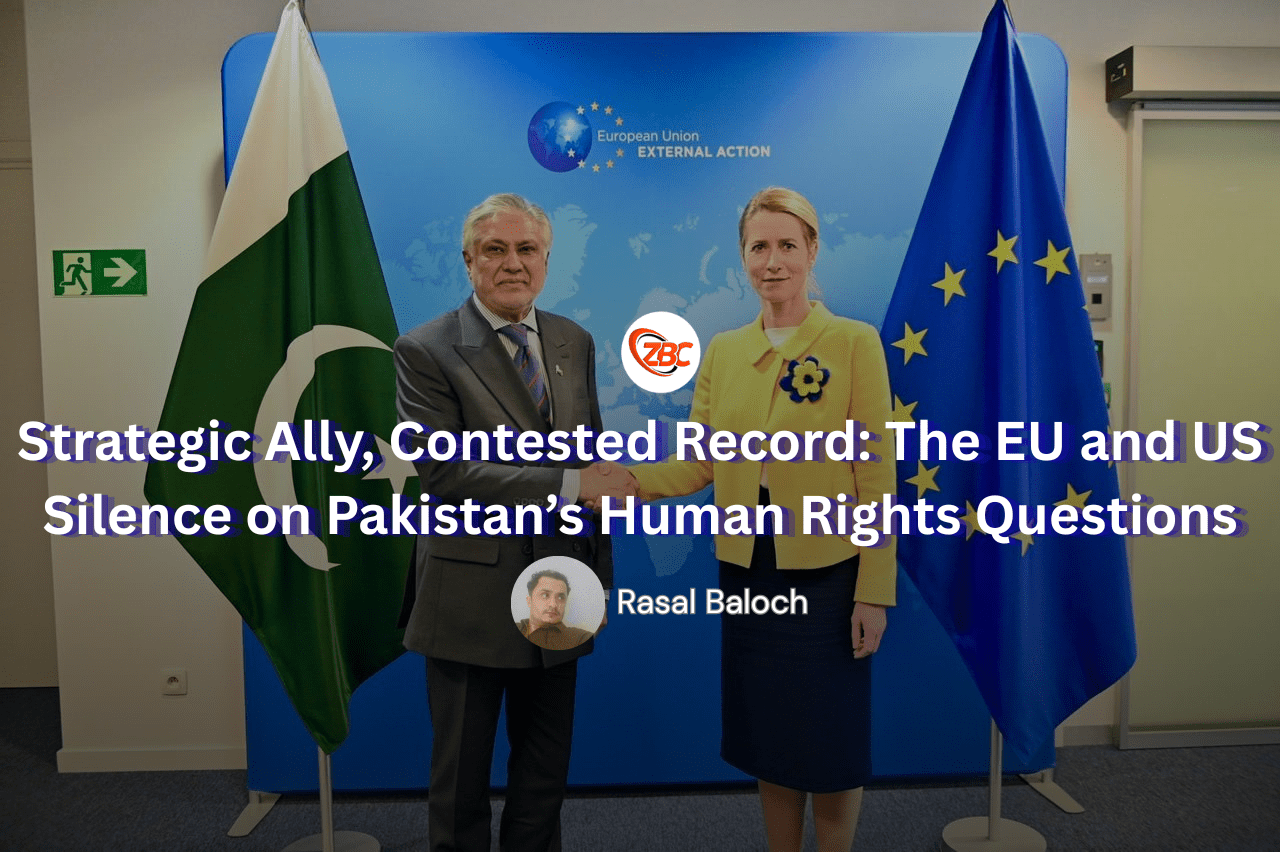
The recent visit of EU foreign policy chief Kaja Kallas to Pakistan highlighted a familiar reality of international politics: strategic interests often outweigh human rights concerns. Praising Pakistan as “a major regional power and an important partner for the EU,” Kallas emphasized trade, diplomacy, and regional security cooperation. Yet for many critics, the visit raised an uncomfortable question: why do Western governments routinely overlook serious allegations of human rights abuses when committed by strategically important allies?
For decades, Pakistan has faced accusations from human rights organizations, journalists, and political activists regarding state violence, enforced disappearances, restrictions on civil liberties, and the suppression of nationalist movements. While international scrutiny is frequently directed toward geopolitical rivals of the West, Pakistan’s record has often received comparatively limited political consequences.
The Shadow of 1971
No discussion of Pakistan’s human rights legacy can ignore the events of 1971 in what was then East Pakistan. During the conflict that led to the creation of Bangladesh, Pakistani military forces carried out a brutal crackdown against Bengali nationalists. Estimates of those killed vary widely, while documented evidence confirms widespread atrocities, including mass killings, displacement, and systematic sexual violence.
More than half a century later, the legacy of 1971 continues to shape perceptions of Pakistan’s military establishment. Critics argue that the absence of comprehensive accountability for those events set a precedent for future abuses.
Balochistan: Pakistan’s Longest Running Conflict
Among the most serious contemporary accusations against the Pakistani state are those emerging from Balochistan. Baloch activists, journalists, and human rights defenders have documented allegations of enforced disappearances, extrajudicial killings, torture, and collective punishment.
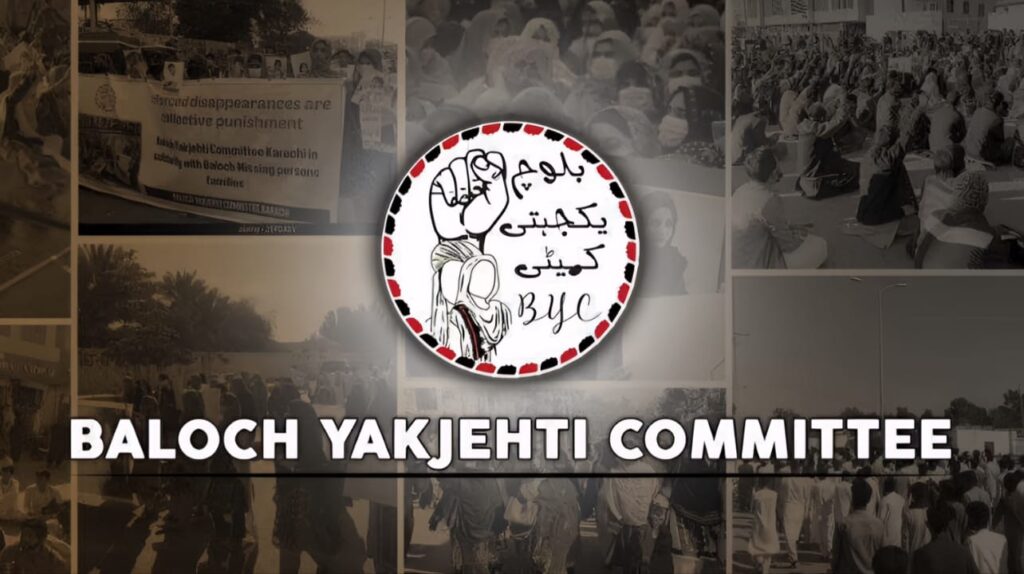
Families of missing persons have spent years protesting outside press clubs and government institutions, demanding information about relatives allegedly taken by security agencies. Human rights groups have repeatedly called for independent investigations into what activists describe as a systematic “kill-and-dump” policy.
The recent sentencing of prominent Baloch activist Dr. Mahrang Baloch and other leaders has intensified concerns among rights advocates, who argue that political dissent in Balochistan is increasingly being criminalized rather than addressed through dialogue.
The Pashtun Question
In Khyber Pakhtunkhwa and the former tribal regions, years of counterinsurgency operations left millions displaced and entire communities devastated by conflict.
The emergence of the Pashtun Tahafuz Movement (PTM) brought renewed attention to allegations of extrajudicial killings, landmines, arbitrary detention, and enforced disappearances. PTM activists argue that Pashtun communities have borne the cost of Pakistan’s security policies while receiving little justice or accountability.
Despite its largely nonviolent platform, the movement has faced arrests, restrictions, and accusations of anti-state activity.
Kashmir: A Contradiction in Policy
Pakistan frequently positions itself internationally as a champion of Kashmiri self-determination. Yet critics point to restrictions in Pakistan-administered Kashmir that limit political expression and participation.
Opponents argue that constitutional requirements regarding accession to Pakistan effectively exclude advocates of full independence from political life. Human rights organizations have also documented concerns regarding restrictions on free expression, protest rights, and political dissent.
For many observers, this creates a contradiction between Pakistan’s international rhetoric and its domestic policies.
Sindh and the Politics of Marginalization
Sindhi nationalist groups have long accused the federal government of economic exploitation, demographic engineering, and political marginalization. Activists point to disappearances, arrests, and intimidation targeting nationalist voices.
Although the intensity of conflict differs from that in Balochistan, critics argue that the underlying pattern remains the same: demands for greater autonomy are frequently treated as security threats rather than political grievances.
Afghanistan: Strategic Depth and Regional Consequences
Pakistan’s role in Afghanistan remains one of the most controversial aspects of its foreign policy.
For decades, regional and international analysts have accused sections of Pakistan’s security establishment of supporting militant proxies to maintain influence in Afghanistan. Critics argue that these policies contributed to instability, violence, and the prolonged suffering of Afghan civilians.
While Pakistani officials reject many of these allegations and emphasize their sacrifices in the fight against terrorism, the debate continues to shape regional perceptions of Pakistan’s role.
Why the West Looks Away
The central question remains: why has Pakistan largely avoided the level of international pressure directed at other states accused of comparable abuses?
The answer lies in geopolitics.
Pakistan occupies a strategic position connecting South Asia, Central Asia, the Middle East, and China. It possesses nuclear weapons, influences developments in Afghanistan, and serves as an important security partner for Western governments.
Economically, Pakistan benefits from preferential trade arrangements with the European Union, while Western governments continue to view Islamabad as an important regional actor.
As a result, criticism often remains limited to human rights reports and diplomatic statements, rarely translating into meaningful political or economic consequences.
The Cost of Selective Human Rights
The credibility of international human rights advocacy depends on consistency. When powerful states condemn abuses in adversarial countries while remaining silent about allegations involving strategic partners, accusations of double standards become unavoidable.
Whether in Bangladesh in 1971, Balochistan, Khyber Pakhtunkhwa, Sindh, Kashmir, or Afghanistan, victims of abuses are unlikely to find comfort in geopolitical calculations. For them, the issue is not which country commits violations, but whether the international community is willing to apply the same standards to allies and adversaries alike.
The challenge for Western governments is therefore not merely recognizing Pakistan’s strategic importance. It is demonstrating that strategic interests do not eclipse principles of accountability, justice, and human rights.
The opinions expressed are solely those of the writer and do not reflect the editorial policy or position of Zrumbesh Media.